
Physical media is irrelevant. You can have physical media that's so locked down that you don't actually own it.
What's actually going to make a comeback is media that you control. If you have a Sony rootkit CD or a DRM-free floc file, the latter beats the former every time. If you have a physical disc of the video game spore which requires you to call into Central servers before writing your video game, or you have a drm-free copy of a similar game that you bought off of Gog, the latter is the only one you actually own.
To that end, I've got a multi-disk NAS in mirroring mode with all my media, and I host jellyfin so I can watch it or listen to it using my own personal hardware, without any need to ask a corporate overlord permission to listen to my own music.
I do have a large library of ebooks, but I've also got a a very real library of paper books on shelves, and short of coming around door to door, nobody can change the contents of either, but particularly not the dead tree books.
It's a big contrast to physical media like what you can get on playstation, xbox, or the Nintendo switch. You can own the physical media for any of these consoles but without an internet connection be totally incapable of playing your games.
Something that you increasingly need to pay attention to now is whether the hardware itself requires internet access and access to a central server you do not control. There have been a number of instances where for example people owned thermostats in their home and could not operate their furnace because the servers for the thermostat company had been shut down. Anyone with a Google video game unit should know that since the streaming service has been shut down they can no longer ever play any of the games that they bought for that. Even someone with an old Nintendo Wii my plug it into the wifi today and discover that many of the items on the home screen are like an old shopping mall that's about to shut down -- the old signs are there, but the real estate has been vacant for years.
I was fairly lucky because I got to experience with this looks like firsthand over 15 years ago. Around 2008, there was a video game streaming service called gametap. It proposed that you would pay a subscription fee and be able to get access to an entire game library on your PC. Had some really good games on offer too, including the original fallout games. Two things occurred: first, is that streaming service lost the license for that video game, you could not play that video game any longer. Second, if you stop paying the subscription fee, you will lose access to all of your video games, and they also locked your saved games behind a paywall as I recall. That was a very early lesson for me how about the dangers of outsourcing ownership.
What's actually going to make a comeback is media that you control. If you have a Sony rootkit CD or a DRM-free floc file, the latter beats the former every time. If you have a physical disc of the video game spore which requires you to call into Central servers before writing your video game, or you have a drm-free copy of a similar game that you bought off of Gog, the latter is the only one you actually own.
To that end, I've got a multi-disk NAS in mirroring mode with all my media, and I host jellyfin so I can watch it or listen to it using my own personal hardware, without any need to ask a corporate overlord permission to listen to my own music.
I do have a large library of ebooks, but I've also got a a very real library of paper books on shelves, and short of coming around door to door, nobody can change the contents of either, but particularly not the dead tree books.
It's a big contrast to physical media like what you can get on playstation, xbox, or the Nintendo switch. You can own the physical media for any of these consoles but without an internet connection be totally incapable of playing your games.
Something that you increasingly need to pay attention to now is whether the hardware itself requires internet access and access to a central server you do not control. There have been a number of instances where for example people owned thermostats in their home and could not operate their furnace because the servers for the thermostat company had been shut down. Anyone with a Google video game unit should know that since the streaming service has been shut down they can no longer ever play any of the games that they bought for that. Even someone with an old Nintendo Wii my plug it into the wifi today and discover that many of the items on the home screen are like an old shopping mall that's about to shut down -- the old signs are there, but the real estate has been vacant for years.
I was fairly lucky because I got to experience with this looks like firsthand over 15 years ago. Around 2008, there was a video game streaming service called gametap. It proposed that you would pay a subscription fee and be able to get access to an entire game library on your PC. Had some really good games on offer too, including the original fallout games. Two things occurred: first, is that streaming service lost the license for that video game, you could not play that video game any longer. Second, if you stop paying the subscription fee, you will lose access to all of your video games, and they also locked your saved games behind a paywall as I recall. That was a very early lesson for me how about the dangers of outsourcing ownership.
Hoe_math is a good creator. I don't need to meet women being married for 14 years, but I've learned a lot from his videos.
The model for history that I have at the moment sees the enlightenment as the era where ideas were created, the French revolution was when those ideas manifested as an actual nation state which fundamentally changed how people related to those ideas, and more or less all of the ideas of modernism including rationality, logic, reason, and rejection of anything that's outside of a relatively simplified frame of reference, ended up turning the West into a military and scientific superpower. The problem is that modernism is not capable of sustaining a society and that's what philosophers such as Nietzsche warned about. Eventually the contradictions of the modernist era resulted in the world wars which led to the current postmodern era that we live in which under my model started almost immediately after the World wars ended.
The problem is that the postmodern era is a house of straw built on quicksand. The idea that you would make the rejection of objective truth your objective truth and the rejection of grand and narratives your grand narrative is self-evidently contradictory in a way that very quickly tears itself apart, and can't be reconciled without bringing in other frames of reference which the modernist abortion of postmodernism which characterizes the late postmodern period we live within explicitly rejects.
The ideal that I've developed and articulated a little bit in my last book was a superpositional view of the world where multiple ways of seeing things can exist at once and are weighted against one another without collapsing into synthesis, but unfortunately it's probably more likely that we end up collapsing into a new modernist regime or return in a lot of ways to the pre-modern regime.
One can hope, though, that perhaps we can find some people wise enough to lead us into a new era that can inherit traits of previous areas that were successful without trying to collapse it into a simplified caricature of itself.
The model for history that I have at the moment sees the enlightenment as the era where ideas were created, the French revolution was when those ideas manifested as an actual nation state which fundamentally changed how people related to those ideas, and more or less all of the ideas of modernism including rationality, logic, reason, and rejection of anything that's outside of a relatively simplified frame of reference, ended up turning the West into a military and scientific superpower. The problem is that modernism is not capable of sustaining a society and that's what philosophers such as Nietzsche warned about. Eventually the contradictions of the modernist era resulted in the world wars which led to the current postmodern era that we live in which under my model started almost immediately after the World wars ended.
The problem is that the postmodern era is a house of straw built on quicksand. The idea that you would make the rejection of objective truth your objective truth and the rejection of grand and narratives your grand narrative is self-evidently contradictory in a way that very quickly tears itself apart, and can't be reconciled without bringing in other frames of reference which the modernist abortion of postmodernism which characterizes the late postmodern period we live within explicitly rejects.
The ideal that I've developed and articulated a little bit in my last book was a superpositional view of the world where multiple ways of seeing things can exist at once and are weighted against one another without collapsing into synthesis, but unfortunately it's probably more likely that we end up collapsing into a new modernist regime or return in a lot of ways to the pre-modern regime.
One can hope, though, that perhaps we can find some people wise enough to lead us into a new era that can inherit traits of previous areas that were successful without trying to collapse it into a simplified caricature of itself.
The Irish and Scottish are examples of colonialism which most people don't think of either because of contemporary racial narratives or because western civilization became myopic.
I figured using three languages of colonized people which the English did their best to suppress was poetic.
I figured using three languages of colonized people which the English did their best to suppress was poetic.
Irish (Gaeilge):
Is féidir a mhaíomh gurbh iad Éire agus Albain dhá cheann de na chéad tionscadail choilíneacha ag Sasana. Ní smaoiníonn go leor daoine air ar an dóigh sin mar, in ainneoin na bhfíoras go léir, ní mhothaíonn sé cosúil le coilíneachas nuair is daoine bána atá á gcoilíniú, agus tá golwg thar a bheith gearr againn ar an stair.
Scottish Gaelic (Gàidhlig):
Faodar a ràdh gur e Èirinn agus Alba dà de na ciad phròiseactan colonaidh aig Sasainn. Chan eil mòran dhaoine ga fhaicinn mar sin, oir, a dh’aindeoin nan fìrinnean uile, chan eil e a’ faireachdainn mar cholonaidheachd nuair is daoine geala a tha fo cholonaidheachd, agus tha mioipia eachdraidheil iongantach oirnn.
Welsh (Cymraeg):
Gellir dadlau mai Iwerddon a’r Alban oedd dau o brosiectau trefedigaethol cyntaf Lloegr. Nid yw llawer o bobl yn ei weld felly oherwydd, er gwaethaf yr holl ffeithiau, nid yw’n teimlo fel trefedigaethu pan fo pobl â chroen golau yn cael eu trefedigaethu, ac mae gennym olwg fer hanesyddol anhygoel.
Is féidir a mhaíomh gurbh iad Éire agus Albain dhá cheann de na chéad tionscadail choilíneacha ag Sasana. Ní smaoiníonn go leor daoine air ar an dóigh sin mar, in ainneoin na bhfíoras go léir, ní mhothaíonn sé cosúil le coilíneachas nuair is daoine bána atá á gcoilíniú, agus tá golwg thar a bheith gearr againn ar an stair.
Scottish Gaelic (Gàidhlig):
Faodar a ràdh gur e Èirinn agus Alba dà de na ciad phròiseactan colonaidh aig Sasainn. Chan eil mòran dhaoine ga fhaicinn mar sin, oir, a dh’aindeoin nan fìrinnean uile, chan eil e a’ faireachdainn mar cholonaidheachd nuair is daoine geala a tha fo cholonaidheachd, agus tha mioipia eachdraidheil iongantach oirnn.
Welsh (Cymraeg):
Gellir dadlau mai Iwerddon a’r Alban oedd dau o brosiectau trefedigaethol cyntaf Lloegr. Nid yw llawer o bobl yn ei weld felly oherwydd, er gwaethaf yr holl ffeithiau, nid yw’n teimlo fel trefedigaethu pan fo pobl â chroen golau yn cael eu trefedigaethu, ac mae gennym olwg fer hanesyddol anhygoel.
Hear me out: since we're selling future generations into debt slavery, how about we pass a balanced budget amendment to the constitution but we can legalize selling your kids into slavery since people love that?
Cool thing coming down the pipe on Amazon:
"Starting January 20, 2026, Amazon will make it easier for readers to enjoy content they have purchased from the Kindle store across a wider range of devices and applications by allowing new titles published without Digital Rights Management (DRM) to be downloaded in EPUB and PDF format. If you take no action, the DRM-status of your previously published titles will not change but the EPUB and PDF downloads will not be enabled for existing DRM-free titles. If you want to allow reader downloads for these titles, follow the directions below on or after December 9, and select the option not to apply DRM."
Meaning that for publishers like me who don't use DRM, people who buy my book will be able to download the DRM-free file without jumping through any hoops.
I've already gone in and made the change that will allow downloads when they come online.
"Starting January 20, 2026, Amazon will make it easier for readers to enjoy content they have purchased from the Kindle store across a wider range of devices and applications by allowing new titles published without Digital Rights Management (DRM) to be downloaded in EPUB and PDF format. If you take no action, the DRM-status of your previously published titles will not change but the EPUB and PDF downloads will not be enabled for existing DRM-free titles. If you want to allow reader downloads for these titles, follow the directions below on or after December 9, and select the option not to apply DRM."
Meaning that for publishers like me who don't use DRM, people who buy my book will be able to download the DRM-free file without jumping through any hoops.
I've already gone in and made the change that will allow downloads when they come online.
Slavery checks.
Since they'll be paid for with debt future generations will have to pay off because we have no intention to.
Since they'll be paid for with debt future generations will have to pay off because we have no intention to.
Assuming there's a set number of education dollars, making sure everything is everywhere means you're taking dollars at crowded schools where a course is wanted and instead using them at sparsely populated schools where a course isn't particularly wanted.
That would result in the people in places where something is wanted being in worse shape, and the people in places where a course isn't particularly wanted being in far better shape artificially. Imagine if you had many departments with no students or almost no students, and a rural university being required to fully fund equally resourced versions of those programs. I imagine the rural Montana university urban planning or outreach degree programs being harder to get qualified teachers for than the University of Chicago equivalent. Meanwhile, the university of Chicago ranch management program would need to be funded like the Montana university program as well.
One real question is whether universities are appropriate for purpose anyway. Prior the WWII they were mostly finishing schools for elites, and they were democratized as part of a (brilliant, if we're being honest) regime intended to prevent repeats of the rise of Hitler or Mussolini or the American Bonus Army, basically giving places for trained killers to go and find opportunities for upward social mobility. You can see that in the tiny number if courses that are relevant to your job that are required to get a "degree" in that field. It makes sense for an elite ruling class to be well rounded in the sciences and humanities, but I can't say it makes similar sense for someone who wants to get vocational training to get a well rounded education when what they want is a job. Notably, the post-World war conditions that made the move necessary hasn't been true for generations. Most of the people the system was intended for are dead of old age, and so are some of their kids.
Another question is whether secondary schools are doing their jobs, since university is increasingly taking the place of high school in establishing basic competence employers can rely on, and some public schools have failed to graduate a single person reading, writing, and doing arithmetic at grade level. Part of the problem is Goodhart's law, that bureaucrats look at high school graduates making more money than drop outs and concluding that therefore we should help more people become high school graduates, which drives down standards and results in the value of such a diploma being diluted among all graduates, which ultimately results in the credential inflation we see.
But I'm just a blue collar schlub, so what do I know?
That would result in the people in places where something is wanted being in worse shape, and the people in places where a course isn't particularly wanted being in far better shape artificially. Imagine if you had many departments with no students or almost no students, and a rural university being required to fully fund equally resourced versions of those programs. I imagine the rural Montana university urban planning or outreach degree programs being harder to get qualified teachers for than the University of Chicago equivalent. Meanwhile, the university of Chicago ranch management program would need to be funded like the Montana university program as well.
One real question is whether universities are appropriate for purpose anyway. Prior the WWII they were mostly finishing schools for elites, and they were democratized as part of a (brilliant, if we're being honest) regime intended to prevent repeats of the rise of Hitler or Mussolini or the American Bonus Army, basically giving places for trained killers to go and find opportunities for upward social mobility. You can see that in the tiny number if courses that are relevant to your job that are required to get a "degree" in that field. It makes sense for an elite ruling class to be well rounded in the sciences and humanities, but I can't say it makes similar sense for someone who wants to get vocational training to get a well rounded education when what they want is a job. Notably, the post-World war conditions that made the move necessary hasn't been true for generations. Most of the people the system was intended for are dead of old age, and so are some of their kids.
Another question is whether secondary schools are doing their jobs, since university is increasingly taking the place of high school in establishing basic competence employers can rely on, and some public schools have failed to graduate a single person reading, writing, and doing arithmetic at grade level. Part of the problem is Goodhart's law, that bureaucrats look at high school graduates making more money than drop outs and concluding that therefore we should help more people become high school graduates, which drives down standards and results in the value of such a diploma being diluted among all graduates, which ultimately results in the credential inflation we see.
But I'm just a blue collar schlub, so what do I know?
Breaking news that Rob Reiner and his wife were murdered, and at this point it looks as if the murder was committed by their son.
I was listening to the introduction to an edition of Paradise Lost and Paradise found. It went through the life of John Milton. One of the most interesting points of John Milton's life is that in spite of his greatest work being about God and satan, heaven and hell, and you might assume that he did his very best to live a virtuous life, it is evident from the behavior of his daughters that he was not fulfilling his duty as the family patriarch in the absence of his late wife. They grew up and grew old resenting the man, and through that reflection of his own behavior towards them they ultimately mistreated him in his old age and disability when he lost his sight. Even after death, his daughters were spiteful towards him, and fought his widow for the remainder of his estate, ultimately succeeding at taking most of his assets.
In the current era, I feel that there is no more salient lesson than this. The sins of the father do get passed down to their children, and the wages of sin is death.
Of course, that's not the whole story. Absolutely, parents can neglect and abuse their children, or spoil them through excess, or simply fail to impart proper values upon them. However, even in the best of circumstances with the best parents available wanting for nothing and being given the best in instruction, some children choose evil, or through physical malady haven't chosen for them. When the parents pay the sins of the children in such a way, you can hardly say it is anything but tragic.
I don't know what's the truth of this story is, whether it is 1, or the other, or some combination of the two. But for me, it is a whisper in my ear: Memento Mori. The only way we live on is through our children, and though we have not perfect control over the lives that they live after us they are reflections of us. More than any political advocacy, it is what we leave behind immediately surrounding us that defines our legacy. So if he was the architect of his own destruction, I feel pathos and pity for him, and if he was not the architect of his own destruction, then I feel deep sorrow at hearing of someone's good works crumbling within their lifetime.
After a very tiny bit of research, it looks as if that son had been struggling with substance abuse since he was a teenager, even to the extent that he spent quite a bit of time homeless. Those struggles were apparently the subject of one of Reiner's films. The world is vast and broad and you can never really say with certainty anything, but the idea that a teenager with multimillionaire parents becomes addicted to drugs or alcohol does suggest me that it is by the fruit of their tree that you will know them. It isn't mandatory, it isn't written in the stars that substance abuse from their son is automatically the parent's fault, but typically you're going to be looking at either a child who is trying to fill a hole with drugs and I'll call that they can't fill with family life, or a home environment where drugs and alcohol are so readily available that even a teenager can quickly get their hands on it. A third possibility is just that the kid made some very stupid choices very early on and there's nothing anyone else could have done.
I can't imagine being an old man slowly bleeding out because my son stabbed me in my life to death. I feel like the thing I would remember the most would be this thought that not only would I be dying but my son would end up dying in prison. The metaphor from Exodus about boiling a calf and it's mother's milk comes to mind.
I was listening to the introduction to an edition of Paradise Lost and Paradise found. It went through the life of John Milton. One of the most interesting points of John Milton's life is that in spite of his greatest work being about God and satan, heaven and hell, and you might assume that he did his very best to live a virtuous life, it is evident from the behavior of his daughters that he was not fulfilling his duty as the family patriarch in the absence of his late wife. They grew up and grew old resenting the man, and through that reflection of his own behavior towards them they ultimately mistreated him in his old age and disability when he lost his sight. Even after death, his daughters were spiteful towards him, and fought his widow for the remainder of his estate, ultimately succeeding at taking most of his assets.
In the current era, I feel that there is no more salient lesson than this. The sins of the father do get passed down to their children, and the wages of sin is death.
Of course, that's not the whole story. Absolutely, parents can neglect and abuse their children, or spoil them through excess, or simply fail to impart proper values upon them. However, even in the best of circumstances with the best parents available wanting for nothing and being given the best in instruction, some children choose evil, or through physical malady haven't chosen for them. When the parents pay the sins of the children in such a way, you can hardly say it is anything but tragic.
I don't know what's the truth of this story is, whether it is 1, or the other, or some combination of the two. But for me, it is a whisper in my ear: Memento Mori. The only way we live on is through our children, and though we have not perfect control over the lives that they live after us they are reflections of us. More than any political advocacy, it is what we leave behind immediately surrounding us that defines our legacy. So if he was the architect of his own destruction, I feel pathos and pity for him, and if he was not the architect of his own destruction, then I feel deep sorrow at hearing of someone's good works crumbling within their lifetime.
After a very tiny bit of research, it looks as if that son had been struggling with substance abuse since he was a teenager, even to the extent that he spent quite a bit of time homeless. Those struggles were apparently the subject of one of Reiner's films. The world is vast and broad and you can never really say with certainty anything, but the idea that a teenager with multimillionaire parents becomes addicted to drugs or alcohol does suggest me that it is by the fruit of their tree that you will know them. It isn't mandatory, it isn't written in the stars that substance abuse from their son is automatically the parent's fault, but typically you're going to be looking at either a child who is trying to fill a hole with drugs and I'll call that they can't fill with family life, or a home environment where drugs and alcohol are so readily available that even a teenager can quickly get their hands on it. A third possibility is just that the kid made some very stupid choices very early on and there's nothing anyone else could have done.
I can't imagine being an old man slowly bleeding out because my son stabbed me in my life to death. I feel like the thing I would remember the most would be this thought that not only would I be dying but my son would end up dying in prison. The metaphor from Exodus about boiling a calf and it's mother's milk comes to mind.
Stoicism isn't being without emotions. Definitionally, stoicism is when you understand that there are things that you can change and things that you cannot change and you choose to focus on the things you can change rather than despairing.
We have a lot of people today who think that the only way to make the world a better place is by effectively taking over the world like a super villain. A few more stoic fathers and we might see those same people passionately acting locally in ways where they can actually change the world.
One caveat: this doesn't and has never meant "don't do hard things". What it means is that you can make the most impact right where you are, and focusing on a distant capitol you have little effect over (or worse, another countries capitol you have no effect over) when there's things to be done in front of you is a recipe for despair.
We have a lot of people today who think that the only way to make the world a better place is by effectively taking over the world like a super villain. A few more stoic fathers and we might see those same people passionately acting locally in ways where they can actually change the world.
One caveat: this doesn't and has never meant "don't do hard things". What it means is that you can make the most impact right where you are, and focusing on a distant capitol you have little effect over (or worse, another countries capitol you have no effect over) when there's things to be done in front of you is a recipe for despair.
Smart watches with 1-2 days of wear time are really stupid, and that's what most are even now.
I liked my pebbles but they all had big problems with design that screwed them up after a few years, the screen stopped working (and their waterproofing wasn't great)
I've got an amazing bip s which has epic battery life at 45 days a charge, but the pairing isn't great even with gadgetbridge and one of the features that was peak on pebble was sending a pre-selected response. You'd be surprised how well you can hold up a conversation with "yes" "no" "maybe" "lol" and "I'll send a message in a bit".
I liked my pebbles but they all had big problems with design that screwed them up after a few years, the screen stopped working (and their waterproofing wasn't great)
I've got an amazing bip s which has epic battery life at 45 days a charge, but the pairing isn't great even with gadgetbridge and one of the features that was peak on pebble was sending a pre-selected response. You'd be surprised how well you can hold up a conversation with "yes" "no" "maybe" "lol" and "I'll send a message in a bit".

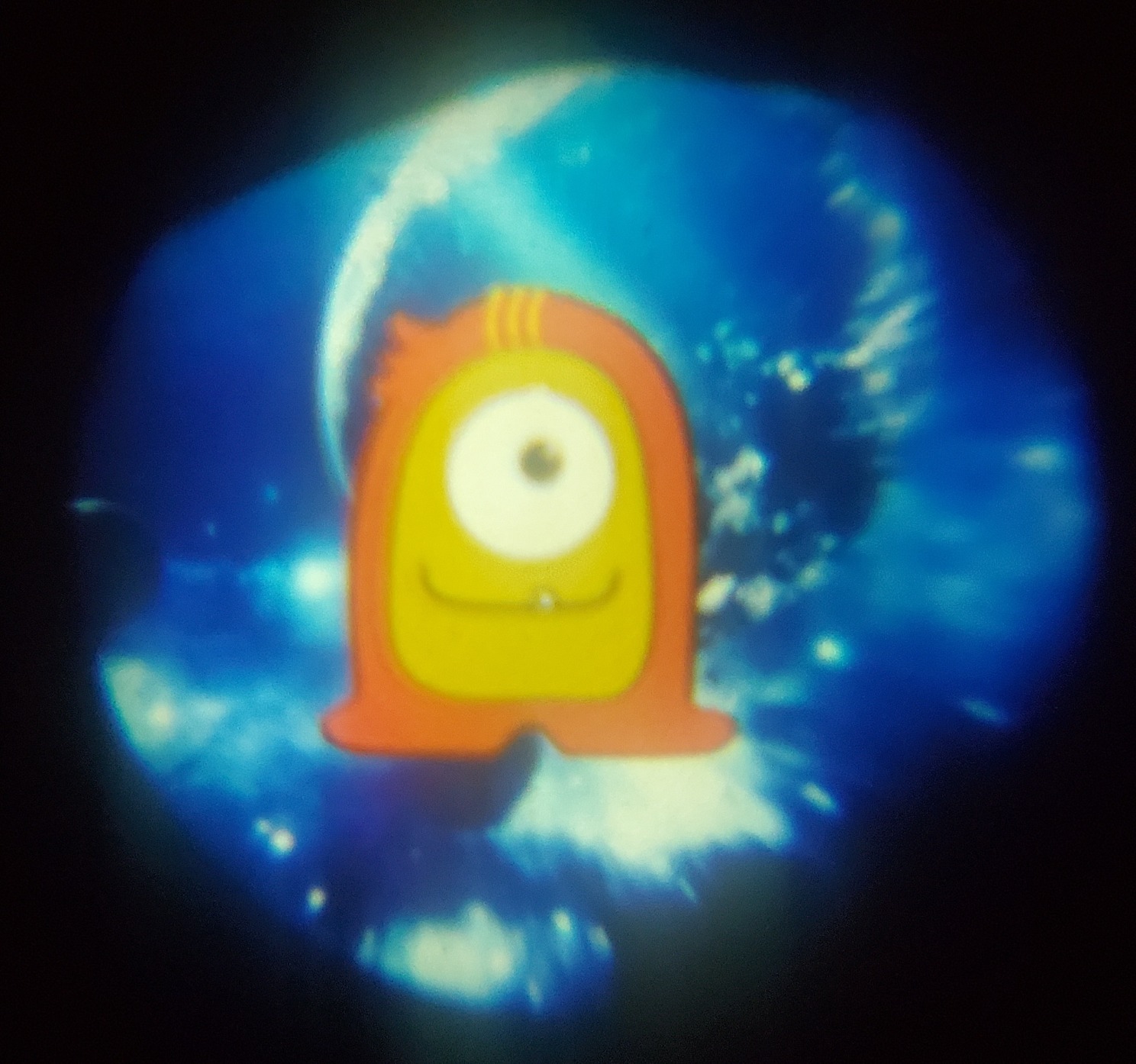
This is my son's's Slavic alien. There are a bunch of different aliens that project on the wall from this flashlight that he bought, but every time I see this one it just looks like someone from Russia wearing a tracksuit, so we always say "oi, suka!" When he shows up in rotation.
Most people don't know that cannaboid psychosis is a real and true thing. Also the cannaboid pain syndrome thing where your entire body hurts because of overexposure to pot.
I think a lot of people would be better off knowing about shit like that.
I think a lot of people would be better off knowing about shit like that.
So we should make everything legal on earth so nobody will ever do anything illegal!
I'm excited for legalized murder so we don't need to buy murders on the black market!
I'm excited for legalized murder so we don't need to buy murders on the black market!